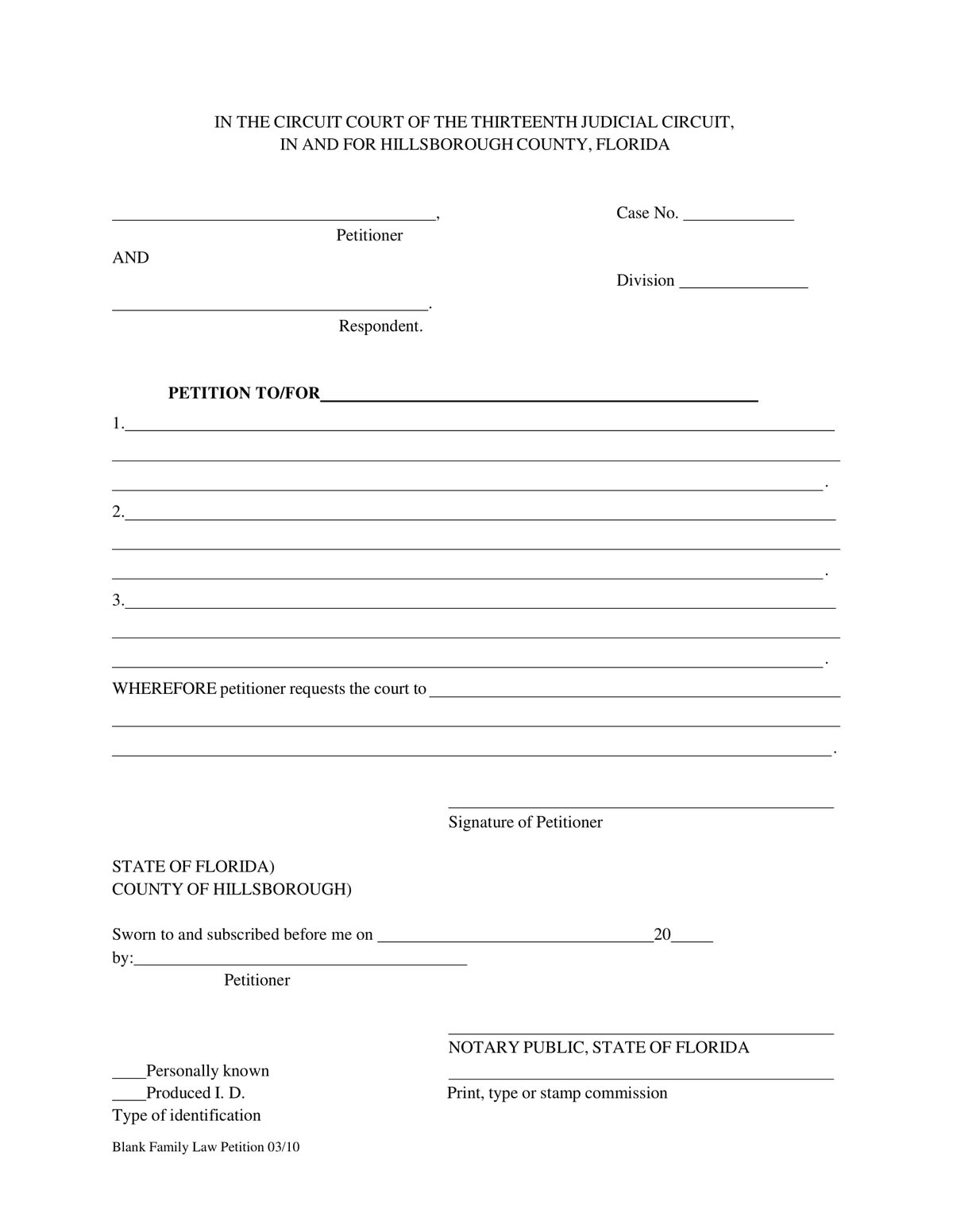
Feeling lost and unheard in the face of an unfair policy, a bureaucratic roadblock, or a court decision that just doesn't sit right? You're not alone. Many people encounter moments where they realize they need more than just a complaint; they need a formal mechanism to challenge, request, or advocate for change. This is where Legal Petitions & Formal Appeals come into play—powerful legal tools that empower you to seek justice, influence decisions, or rectify errors.
This guide is for anyone who's ever wondered how to effectively use these avenues, whether you're looking to challenge a local regulation, dispute a court ruling, or simply make your collective voice heard on an issue that matters. We'll demystify the complex world of legal petitions and formal appeals, providing you with clear, actionable insights to navigate these critical processes.
At a Glance: Key Takeaways
- Petitions are formal requests to an authority for specific action, policy change, or redress of grievances. They can be legislative, administrative, judicial, or public awareness-focused.
- Appeals are requests for a higher court to review and potentially overturn or modify a lower court's decision due to legal error, procedural issues, or abuse of discretion.
- The Right to Petition is a fundamental First Amendment protection, ensuring citizens can formally express dissatisfaction without fear.
- Choosing Your Path (Petition vs. Appeal) depends on whether you're initiating a request for action or challenging an existing decision.
- Strict Deadlines are paramount for both; missing them can permanently forfeit your rights.
- Professional Guidance from an attorney is highly recommended for legal petitions and almost essential for formal appeals.
- Clarity, Evidence, and Procedure are the bedrock of success in both processes.
Demystifying Your Options: Petitions vs. Appeals
It's easy to confuse the terms "petition" and "appeal," but understanding their distinct roles is the first step toward choosing the right legal strategy. Think of it this way:
- A petition is generally about starting something or requesting a new action. You're initiating a formal conversation with an authority, asking them to do something they haven't done yet, or to change something they've already decided.
- An appeal is specifically about reviewing something that has already happened. You're asking a higher authority (usually a court) to look at a decision made by a lower authority and correct what you believe was an error.
Both are formal requests, but their timing, purpose, and procedural requirements differ significantly.
The Power of Your Voice: Understanding Legal Petitions
Imagine a collective sigh of frustration turning into a unified roar—that's the essence of a petition. At its heart, a petition is a formal plea, a structured way to ask an authority or organization for a specific action or change. It's a fundamental mechanism for public expression and advocacy in a democratic society, a way to make collective will known.
What Exactly Is a Petition?
In its broadest sense, a petition is a document or declaration signed by numerous individuals, signifying shared concerns or demands directed towards an authority. Its purpose isn't just to complain; it's to voice concerns, propose changes, seek redress for grievances, articulate collective will, and demonstrate widespread support for a cause. Whether you're a single individual seeking a specific legal remedy or part of a group advocating for policy shifts, a petition serves as your formal written request. The act of formally making such a request often falls to a suppliant, a person making a humble and earnest plea.
Why Petition? Driving Change and Seeking Redress
People and organizations file petitions for a myriad of reasons:
- To propose new laws or policies: Advocating for legislative action at local, state, or federal levels.
- To amend existing regulations: Seeking changes in how government agencies operate or enforce rules.
- To challenge administrative decisions: Requesting a review or reversal of a specific ruling made by a governmental body.
- To seek specific legal remedies: Asking a court for a particular outcome in a legal matter (e.g., child custody, immigration status adjustment).
- To influence public opinion or corporate behavior: Though not always legally binding, public awareness petitions can exert significant pressure.
Different Flavors of Petitions: Tailoring Your Approach
Petitions aren't one-size-fits-all. Their form and target depend entirely on what you're trying to achieve:
- Legislative Petitions: These are aimed at governmental bodies like state legislatures or the U.S. Congress. Their goal is typically to advocate for the enactment, amendment, or repeal of laws. Think of citizens petitioning for stricter environmental regulations or a change in tax policy.
- Administrative Petitions: When you want to influence how a government agency operates, an administrative petition is your tool. You might be seeking changes in regulations, policies, or specific administrative decisions made by bodies like the EPA, FDA, or your local zoning board.
- Judicial Petitions: These are formal requests made directly to courts, asking for specific legal remedies or actions. Common examples include:
- Petition for Writ of Habeas Corpus: Asking a court to determine if a person's detention is lawful.
- Petition for Certiorari: Requesting a higher court (like the Supreme Court) to review a lower court's decision.
- Petition for Dissolution of Marriage: Initiating divorce proceedings.
- Petition for Guardianship: Seeking legal authority over another person.
- Public Awareness Petitions: Often seen online (e.g., Change.org), these petitions aim to influence public opinion, pressure corporations, or bring attention to social issues. While they may not have direct legal enforceability, their power lies in their ability to mobilize public support and generate media attention.
The First Amendment and Your Right to Petition
It's crucial to remember that the right to petition the government for a redress of grievances is a fundamental liberty explicitly protected by the First Amendment of the U.S. Constitution. This protection ensures that citizens can formally request changes or express dissatisfaction with government actions without fear of reprisal. It's a cornerstone of democratic participation, allowing you to directly engage with your government.
However, this right doesn't guarantee a specific outcome or even a response. While you have the right to petition, the government isn't obligated to grant your request. For specific official petitions, such as those for ballot initiatives or referendums, there are often precise legal requirements concerning signature verification, formatting, and submission deadlines that must be meticulously followed.
Navigating the Petition Process: A General Roadmap
While specifics vary, a general petition process often follows these steps:
- Identify the Issue: Clearly define the problem or grievance you want to address. What's wrong?
- Articulate the Desired Outcome: What specific change or action are you seeking? Be precise. "We want better schools" is less effective than "We request increased funding for STEM programs by 15% in the next fiscal year."
- Gather Support: Collect signatures from individuals who share your concern. This can be done physically or through online platforms. The more legitimate signatures, the stronger your collective voice.
- Draft the Petition: Create a clear, concise, and compelling written document. State the issue, the requested action, and the reasons why it's necessary.
- Formally Present the Petition: Submit your petition to the intended recipient (e.g., city council, state representative, government agency, court) according to their specific procedures.
Key Elements for an Influential Petition
Not all petitions are created equal. To maximize your impact:
- Clarity and Specificity: Vague requests are easily dismissed. Be crystal clear about the problem and the solution you're proposing.
- Number and Diversity of Signatures: A large volume of signatures, especially from diverse demographics or key stakeholders, demonstrates widespread support.
- Public Awareness and Media Attention: If your cause resonates, media coverage can amplify your message and pressure decision-makers.
- Receptiveness of the Intended Recipient: Research your target. Are they generally open to public input? Understanding their political landscape can inform your strategy.
- Sound Legal Basis (for legal petitions): If you're filing a judicial or administrative petition, your request must be grounded in existing law or compelling legal arguments.
When a Decision Goes Wrong: Navigating Formal Appeals
Sometimes, despite your best efforts, a court or administrative body makes a decision that you believe is incorrect or unjust. This is where the concept of an appeal becomes your critical legal lifeline. An appeal isn't a do-over of the original trial; it's a review of the fairness and legality of that initial process.
What Exactly Is an Appeal?
An appeal is a formal request for a higher court (an appellate court) to review and reconsider a lower court’s decision. It's pursued by parties who are dissatisfied with a lower court ruling, specifically seeking to overturn or modify the decision because of perceived legal errors, procedural irregularities, or misapplications of the law. You're essentially asking, "Did the first court get it right, legally speaking?"
Why Appeal? Seeking Justice for Errors
You appeal when you believe the original decision was flawed, not simply because you didn't like the outcome. Common reasons for pursuing an appeal include:
- Errors of Law: The lower court misunderstood or incorrectly applied a statute, precedent, or legal principle. For example, if a judge incorrectly instructed a jury on the elements of a crime.
- Errors of Fact (Limited Scope): While appellate courts generally defer to the lower court's findings of fact, an appeal might be possible if a factual finding was "clearly erroneous" or entirely unsupported by the evidence. This is a high bar to meet.
- Procedural Irregularities: The lower court or parties involved failed to follow proper legal procedures, which prejudiced the outcome. This could include issues with evidence admission, jury selection, or due process violations.
- Abuse of Discretion: A judge made a decision where they had some leeway, but that decision was arbitrary, unreasonable, or not supported by the facts or law.
The Appellate Process: A Step-by-Step Guide
Appeals are highly structured and follow specific rules, which can vary by jurisdiction. Here's a general overview:
- File a Notice of Appeal: This is the crucial first step and signals your intent to appeal. It must be filed within a strict, non-negotiable timeframe (often 30 days) after the lower court's final judgment. Missing this deadline is almost always fatal to an appeal.
- Prepare the Record: The official record of the lower court proceedings (transcripts of testimony, filed documents, exhibits) is assembled and sent to the appellate court. The appellate court will only review what was presented to the lower court. New evidence generally cannot be introduced on appeal.
- File Appellate Briefs: Both the appealing party (the "appellant") and the responding party (the "appellee") submit detailed written arguments called "briefs."
- The appellant's brief argues why the lower court's decision was wrong, citing specific legal errors and supporting them with legal reasoning and citations to case law and statutes.
- The appellee's brief responds to these arguments, explaining why the lower court's decision should be upheld.
- Oral Arguments (Optional): In some cases, or if requested by the court, attorneys for both sides will present their arguments verbally to a panel of appellate judges, who may ask probing questions. This is typically a very brief (e.g., 10-20 minute) session.
- Appellate Court Decision: After reviewing the briefs and potentially hearing oral arguments, the appellate court renders its decision, typically in a written opinion. This decision explains the court's reasoning and its ruling.
Potential Outcomes of an Appeal
An appellate court typically has three main options:
- Affirm: The appellate court agrees with the lower court's decision and upholds it. The original ruling stands.
- Reverse: The appellate court disagrees with the lower court's decision, finding a significant legal error, and overturns it. This might mean the case is dismissed or sent back for a new trial.
- Modify: The appellate court agrees with parts of the lower court's decision but changes other parts. For example, it might uphold a conviction but reduce a sentence.
- Remand: The case is sent back to the lower court for further proceedings consistent with the appellate court's instructions. This often happens if a new trial is ordered or if the lower court needs to reconsider certain aspects based on the appellate court's legal findings.
Petition vs. Appeal: Choosing Your Path Wisely
Deciding whether to file a petition or pursue an appeal is a critical strategic choice that hinges on the specific circumstances of your situation.
Core Differences Summarized
| Feature | Legal Petition | Formal Appeal |
|---|---|---|
| Purpose | Initiate action; request new decision/change; voice concerns. | Review existing lower court decision for legal error. |
| Timing | Can be filed as an initial action (e.g., starting a lawsuit). | Filed after a final judgment by a lower court. |
| Focus | Presenting an initial claim or request. | Identifying and arguing legal errors in a prior proceeding. |
| Evidence | May introduce new evidence to support the request. | Generally limited to the record created in the lower court. |
| Recipient | Government agencies, legislative bodies, courts (as first instance). | Higher courts (appellate courts). |
| Outcome | Granting of the request; policy change; legal remedy. | Affirm, Reverse, Modify, or Remand the lower court's decision. |
Decision Criteria: Which Path for You?
To make the right choice, consider these questions:
- What's the nature of your issue? Are you trying to start a new legal process or advocate for a policy? That's likely a petition. Are you unhappy with a final decision from a court or administrative body and believe it was legally flawed? That's an appeal.
- Has a final decision already been rendered? If a court has issued a final judgment and you believe it contains legal errors, an appeal is your route. If you're trying to get a court to act on something for the first time, a petition is usually appropriate.
- What are the procedural requirements? Petitions to agencies might have different forms and deadlines than judicial petitions or appeals. Research these diligently.
- What are the potential outcomes? Are you seeking to initiate a new right (petition for custody) or overturn an existing ruling (appeal of a conviction)?
- Is there a clear legal error? Appeals are not for re-trying a case or simply presenting new facts. You must identify specific errors of law or abuses of discretion by the lower court.
Mastering the Details: Practical Tips & Common Pitfalls
Both legal petitions and formal appeals are intricate processes that demand precision and strategic thinking. Approaching them without careful planning can lead to wasted time, resources, and ultimately, the loss of your legal rights.
Timing is Everything: Deadlines You Can't Miss
This cannot be stressed enough: Deadlines are absolute. Whether it's filing a notice of appeal within 30 days of a judgment or submitting an administrative petition by a specific date, these time limits are strictly enforced. Miss a deadline, and you almost certainly forfeit your right to proceed, regardless of the merits of your case.
- Action Step: Immediately upon identifying an issue that might require a petition or appeal, ascertain all relevant deadlines. Calendar them, set multiple reminders, and work backward to ensure ample time for preparation.
The Indispensable Value of Professional Guidance
While you can sometimes file certain petitions or even an appeal pro se (without a lawyer), it is rarely advisable, especially for appeals. The legal landscape is a minefield of complex rules, precedents, and procedures.
- For Petitions: A lawyer can help you identify the correct type of petition, draft it with the necessary legal language, gather supporting evidence, and navigate the specific agency or court protocols. They can also advise on the likelihood of success and potential alternatives.
- For Appeals: Appellate law is highly specialized. An appellate attorney understands the nuances of identifying reversible error, crafting persuasive briefs, and presenting arguments before a panel of judges. They know the procedural rules inside and out, which are often different from trial court rules. Without an attorney, your chances of success are drastically reduced.
Crafting Your Arguments: Precision & Persuasion
Whether it's a petition outlining your demands or an appeal brief dissecting legal errors, the quality of your written argument is paramount.
- Be Clear and Concise: Avoid jargon where possible, and explain complex issues simply. Judges and administrators are busy; make your point efficiently.
- Be Specific: Don't generalize. Point to exact facts, specific regulations, or precise legal errors.
- Be Logical: Build your argument step by step, ensuring each point logically flows to the next.
- Be Persuasive (without being overly emotional): While passion can fuel your cause, legal arguments require objective reasoning and a focus on law and fact. Emotional appeals rarely sway legal professionals.
Gathering Evidence: What You Need and How to Present It
Evidence is the backbone of any legal claim.
- For Petitions: You'll need evidence to support your asserted facts and the need for the requested action. This could include documents, data, expert opinions, testimonies, or statistical analyses.
- For Appeals: Your evidence is strictly limited to the record from the lower court. You cannot introduce new evidence. Your attorney will help you identify parts of the trial transcript or exhibits that demonstrate the legal errors you're claiming.
Always ensure your evidence is properly organized, authenticated, and presented according to the rules of the specific forum.
Pitfalls to Avoid: Common Mistakes That Sink Cases
- Missing Deadlines: As mentioned, this is the most common and often fatal error.
- Insufficient Grounds: For an appeal, simply being unhappy with the outcome isn't enough. You need specific, articulable legal errors. For petitions, your request must be legally or procedurally viable.
- Improper Formatting or Procedure: Courts and agencies have strict rules about how documents are formatted, filed, and served. Deviations can lead to rejection.
- Lack of Specificity: Vague arguments are weak arguments. Clearly state what happened, what the law says, and how the law was misapplied or how your petition should be granted.
- Attempting to Re-try the Case on Appeal: An appellate court reviews the record for legal errors, it does not re-hear testimony or consider new evidence.
- Emotional Appeals Over Legal Arguments: While the underlying issue may be deeply personal, legal processes require objective, legal reasoning.
Beyond the Basics: Frequently Asked Questions
Understanding the core concepts is vital, but many practical questions often arise. Here are some common ones:
Can I file a petition or appeal without a lawyer?
Legally, yes, you generally have the right to represent yourself (pro se). However, it is highly discouraged, especially for appeals, which are extremely complex. For specific legal petitions (e.g., some family law matters), pro se filings are more common, but still challenging. For most formal appeals, an attorney is virtually essential due to the specialized nature of appellate procedure and legal argument.
How much does it cost?
The costs vary wildly.
- Petitions: Can range from minimal filing fees for administrative requests to significant legal fees for complex judicial petitions requiring extensive legal work and evidence gathering.
- Appeals: Are almost always expensive. Costs include court filing fees, transcript preparation fees (which can be thousands of dollars), and substantial attorney fees, as appellate work is specialized and time-intensive. Some attorneys charge flat fees, others by the hour.
What's the success rate?
Success rates are hard to generalize as they depend heavily on the specific type of petition or appeal, the strength of the legal arguments, the jurisdiction, and the facts of the case. Many appeals are affirmed, meaning the lower court's decision is upheld. Petitions vary based on public support, legal merit, and the receptiveness of the target authority.
Do petitions guarantee a response or a specific outcome?
No. While the First Amendment protects your right to petition the government, it does not guarantee that your petition will be granted, or even that you'll receive a formal response. For public awareness petitions, the "outcome" is often measured in increased awareness or public pressure rather than a direct legal change. Legal petitions to courts or agencies will typically receive a response (a ruling or decision), but not necessarily the one you seek.
How long do these processes take?
- Petitions: Can range from weeks for simple administrative requests to many months or even years for complex judicial petitions involving multiple parties and extensive discovery.
- Appeals: Typically take several months to over a year, sometimes longer, from the filing of the notice of appeal to the appellate court's final decision. This includes time for transcript preparation, brief writing, and the court's deliberation.
Your Next Steps: Empowering Your Legal Journey
Navigating the world of legal petitions and formal appeals can feel daunting, but remember, these are established avenues designed to provide recourse and allow your voice to be heard. The most crucial takeaway from this guide should be this: don't go it alone if you don't have to.
- Assess Your Situation: Clearly define what you want to achieve and why. Is it a new action you seek (petition) or a review of a past decision (appeal)?
- Research the Specifics: Identify the exact type of petition or appeal relevant to your case and the specific rules, forms, and deadlines of your jurisdiction or the relevant authority.
- Consult with an Attorney: This is often the most critical step. A qualified lawyer can evaluate the merits of your case, advise on the best course of action, and guide you through the intricate legal procedures, significantly increasing your chances of a favorable outcome.
- Gather Your Documentation: Organize all relevant facts, documents, and evidence. Precision and thoroughness are your allies.
- Act Promptly: Time is almost always of the essence. Don't delay in seeking advice or initiating the process once you've decided on your path.
Whether you're advocating for a community change or challenging a pivotal court ruling, understanding these powerful legal tools empowers you to take a meaningful step forward. Your journey through the legal system starts with knowledge and strategic action.